The Monster Times
The publication the world badly needs

The Monster Times
There is a rhythm to it now. So familiar it barely registers.

The United States Government pays to kill. The intelligence agencies organise the crime scene. The military-industrial complex does the killing. And the mainstream media—that great, grey chorus of respectability—digs the grave.
Then come the op-eds. Wrapped in the language of solemnity, draped in the vocabulary of “hard choices” and “unfortunate necessities”. They cover the atrocity with such callous capability that one begins to wonder where the chain actually starts.
Who is the first hand on the shovel?
But not for the innocent lives lost—the children pulled from rubble, the students whose notes will never be read, the journalists buried under the weight of the very story they were trying to tell, the medics killed mid-healing, the mothers and fathers erased from family photos.
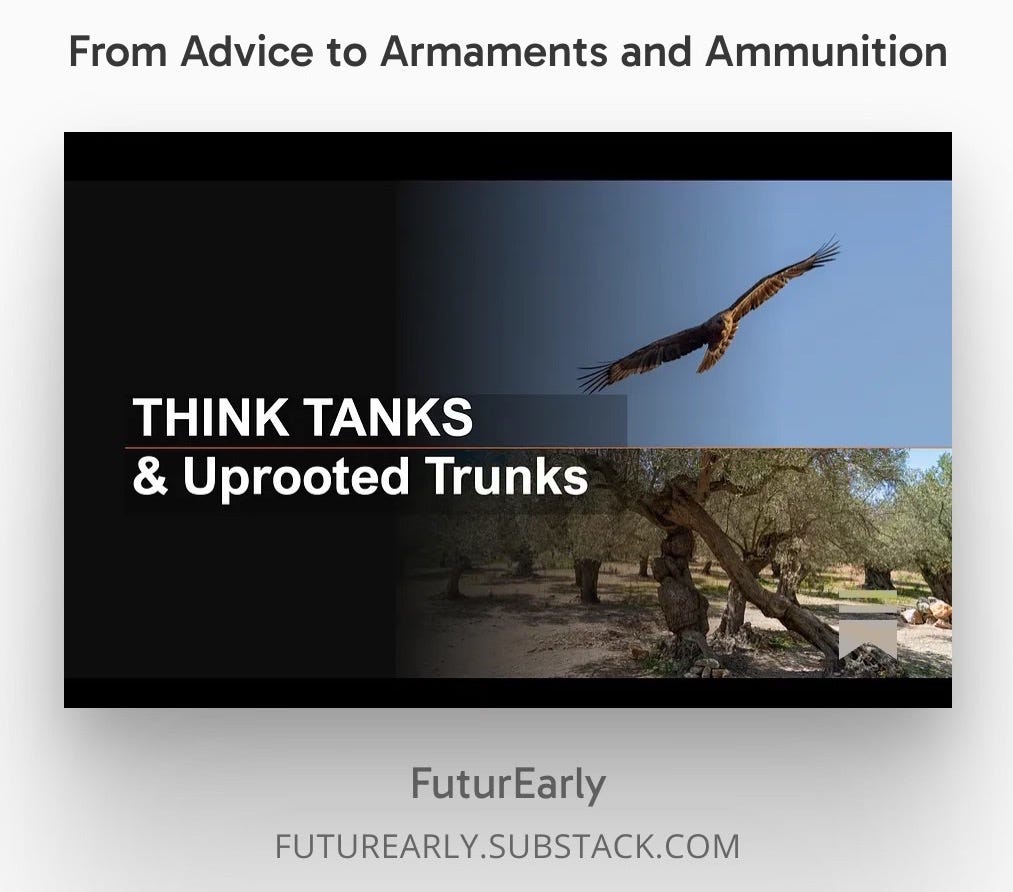
No. The think tanks write obituaries for strategy. For credibility. For the narrative. The dead are merely a line item in a footnote about “collateral effects”.
This is the cross-contaminated circle. A closed loop of blood and plausible deniability. Government funds the weapon. Intelligence stages the justification. Industry manufactures the means. Media manufactures the memory.
And then the journals—so many of them with Times in their titles, as if the very word confers authority—print the post-mortems with the same detached professionalism they might apply to a quarterly earnings report.
They ask the right questions in the wrong way. They perform outrage while preserving access. They are grave-diggers in suits.
Perhaps we need a new publication. Call it The Monster Times. In its pages, perhaps, we could find the truth.
Port of Beirut, for instance. Not “the official” version.
Not the one laundered through the usual channels. The truth that sits like a splinter in the throat of anyone who watched and wondered: what really happened that day? The blast never properly investigated. The truth buried alongside the bodies.?
The circle remains unbroken.
Because the think tank writes the op-ed. The op-ed shapes the permission structure. The permission structure enables the policy. The policy is parroted by the "inner circle." And the circle closes—with more children under more rubble.
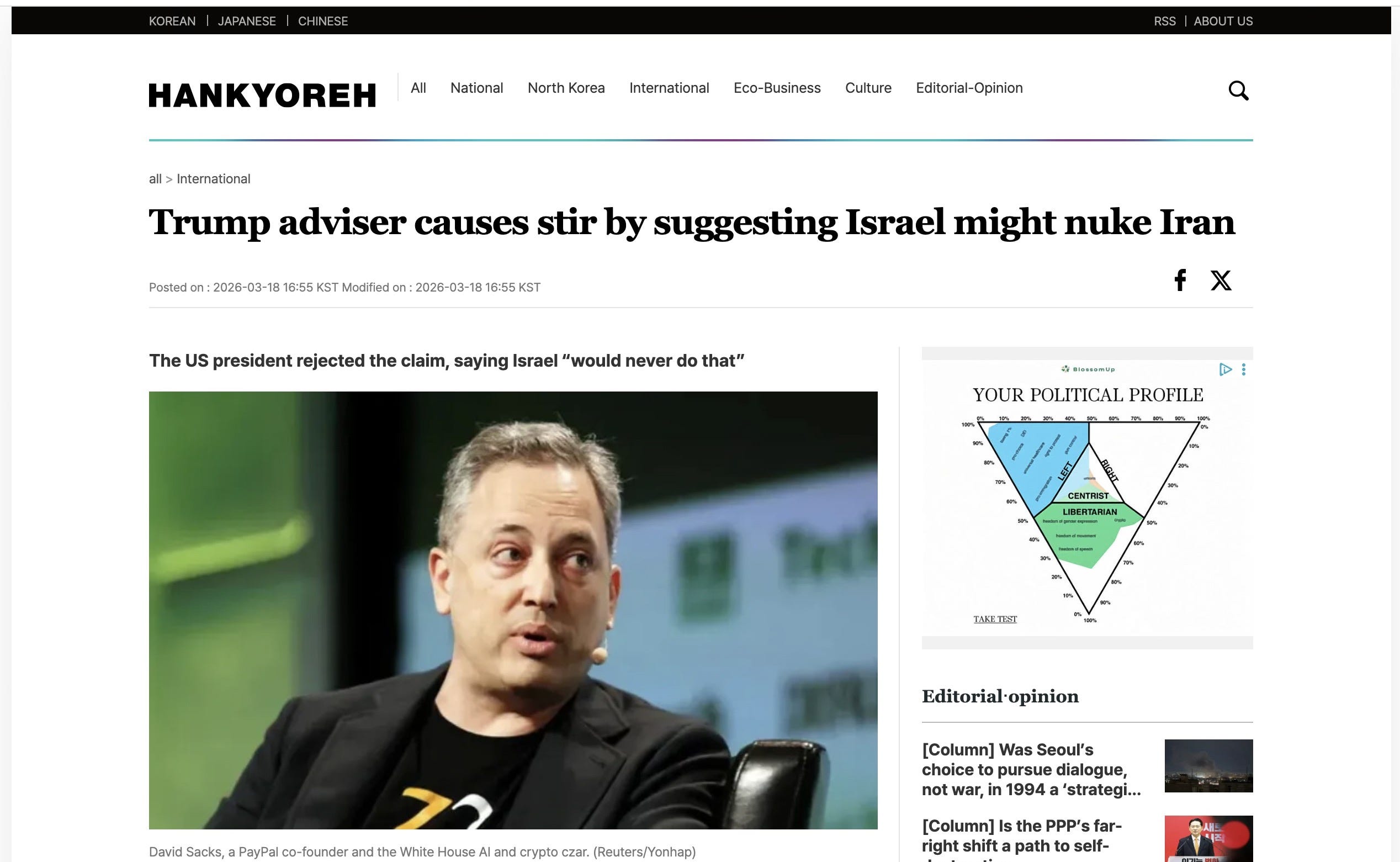
Why do men like David Sacks speak so casually of dropping a nuclear warhead on a country of 93 million?
In 2026.
And why does no journal press them?
The very accusations the United States levelled to start this war of choice— weapons of mass destruction, the spectre of nuclear proliferation—are now the instruments of horror its commentators drop into casual conversation.
No irony acknowledged. No shame registered.
Gall. Grossi, grossly compromised, grotesquely silent—while the weapons he refuses to condemn are carved into public discourse by a presidential advisor.
He mutters the same, without shame, as a humanitarian disaster burns across our screens. And the journalists who should be asking why the guardian of the nuclear non-proliferation treaty is lending his voice to those who would shred it? Nowhere to be found.
Watch minute 7:00 to 7:14. Then ask yourself why no one is asking. 👇🏼
What ensues in the times we live in will burn every publication in shame—if any of them survive long enough to feel it.
One day—perhaps not soon, but one day—the archives will be opened, and readers will look back on these years of measured prose and balanced sourcing and ask: how did they write about atrocity as if it were weather?
Stories are not told from corruption to corruption. From campaign to campaign. From crime to crime. That is not a story; that is a transaction.
Stories are told chest to chest. Breath to breath. From one person who has seen something to another who refuses to look away.
The griot knew this. For a thousand years, they carried memory in their lungs, refusing to let the dead become footnotes.
The truth does not live in think tanks or in the op-ed pages of journals with Times in their name. The truth lives in the rubble, waiting for someone to stop digging graves and start digging answers.
The circle can be broken. But first, we have to name what holds it together.
The Monster Times would name it.
If anyone had the courage to print it.
Photo Credit: Bales Studio